
When Medical Care Goes Wrong: Legal Accountability, Rights & Remedies in Health Law
By Stephen Odhiambo, Africa Health Law Researcher, ‘24 and Trainee Lawyer, SOKLaw Advocates, ‘26
Introduction
On 21st November 2025, AfricaHealthLaw in collaboration with with Daystar University School of Law hosted a moot court competition on medical negligence and health law, a scenario that challenged participants to examine the intersection of medical ethics, constitutional rights, and tort law. The discussions went beyond theory, reflecting real-life legal and clinical challenges that Kenyan families face in hospitals every day.

2. A Scenario That Hits Home
Consider this: taking a loved one to a reputable maternity hospital, hopeful for a smooth delivery. Hours later, prolonged Labour and distress signals go unaddressed. The caesarean section is delayed until the baby’s heartbeat drops. The newborn is silent, requiring intensive resuscitation. Days later, a diagnosis of spastic quadriplegic cerebral palsy emerges, a lifetime of specialized care now inevitable.
This scenario, central to the moot, raises pressing questions:
How far does a hospital’s duty of care extend?
When does oversight cross into negligence?
What rights do patients and children hold under Kenyan law?
What remedies are available for families left with lifelong care obligations?
3. Negligence: Duty, Breach, and Foreseeable Harm
Medical negligence arises when a practitioner breaches a duty of care, causing foreseeable harm. The duty exists the moment a patient presents for care. Key elements include:
Duty of care owed by the healthcare provider;
Dereliction/Breach by falling below accepted professional standards;
Causation
Resultant harm/ Damages
The law requires healthcare professionals to exercise the level of skill and care reasonably expected of competent practitioners. In Bolam v Friern Hospital Management Committee [1957], it established that adherence to a responsible body of professional opinion can shield a doctor from negligence, while Bolitho v City and Hackney Health Authority [1998] requires that opinion to be defensible and logical.
In the moot scenario, delayed caesarean intervention, slow dilation management, and ignored fetal distress signal a potential breach. A reasonable obstetrician would likely have acted earlier, rendering harm both foreseeable and avoidable.
4. Rights to Health under the Constitution of Kenya 2010
Medical negligence claims are increasingly rights-based, anchored in the Constitution:
Article 43(1)(a) - right to the highest attainable standard of health;[1]
Article 28 - human dignity;[2]
Article 53(1)(c) - child’s right to basic healthcare;[3]
Articles 20 & 21 - obligation of all entities to respect and fulfill rights.
Cases such as P.A.O. & 2 Others v Board of Trustees, Kenyatta National Hospital [2019] eKLR and L.N.M v Attorney General & 5 Others [2016] eKLR settle that failures in maternal care may constitute constitutional breaches. Delays in response leading to lifelong disability thus implicate both professional standards and fundamental rights.
5. Institutional and Vicarious Liability
Hospitals cannot outsource responsibility. Kenyan courts consistently hold institutions vicariously liable for staff actions within their employment scope. In Jimmy Paul Semenye v Aga Khan Health Service, Kenya [2006] eKLR, the court affirmed hospital liability for negligent delivery causing newborn injury. In practice, institutions must answer not only for individual clinicians but also for systemic failures in supervision and care.
6. Damages and Remedies
Successful claims typically yield compensatory, not punitive, damages to redress actual loss. Courts consider:
Special damages - hospital bills, NICU stays, rehabilitation, specialized equipment;
General damages - pain, suffering, permanent developmental loss;
Future care costs - physiotherapy, occupational therapy, nutritional support;
Loss of earning capacity - parental support obligations limiting employment opportunities.
Cases such as Makena & 2 Others v Ntiinyari (Civil Appeal E156 of 2023) [2025] KEHC 7810 and Naila Qureshi & Another v Dr. Raffique Parker & 2 Others (June 2025) highlight awards between Kshs 48 million and 157 million, reflecting severity, lifelong care, and loss of potential income. Expert reports projecting ongoing care needs provide a solid basis for relief.
7. Key Lessons and Takeaways
The moot scenario offers essential takeaways for both legal and medical communities:
ü Clinical decisions must be timely, defensible, and evidence-based;
ü Patient complaints are legally and clinically material;
ü The Constitution elevates medical errors to human rights concerns;
ü Compensation pathways exist for lifelong consequences;
ü Institutions must maintain proactive systems, supervision, and staff training;
ü Legal awareness empowers families and professionals, promoting accountability and systemic improvement.
8. Concluding Reflections
Healthcare is more than a service;[4] it is a social and constitutional commitment under Kenyan law. As courts continue to clarify medical negligence and health rights, families, clinicians, and institutions must adapt to a landscape demanding compassion, competence, and accountability.
These developments extend beyond theory, shaping lives, influencing healthcare systems, and ensuring that errors are met with meaningful remedies. For practitioners and families alike, understanding the intersection of law and healthcare can transform silent suffering into actionable justice.
[1] Article 43 makes the right to health a justiciable fundamental right, obligating the Kenyan government to ensure health services and conditions are available, affordable, and of good quality for everyone, with specific duties to protect and advance it.
[2] Article 28 of the Constitution guarantees inherent human dignity, which underpins the right to health (Article 43(1)(a)) by demanding that health services be provided with respect, free from stigma, and accessible to all, fostering conditions for a healthy and holistic well-being.
[3] Article 53(1)(c) of Kenya's Constitution guarantees every child the fundamental right to basic nutrition, shelter, and healthcare, establishing a positive obligation on the State to provide these essentials, not just the highest attainable standard like general health rights, but foundational support for survival and well-being.
[4] World Health Organization, ‘Primary Health Care’ (WHO) https://www.who.int/health-topics/primary-health-care accessed 26 December 2025
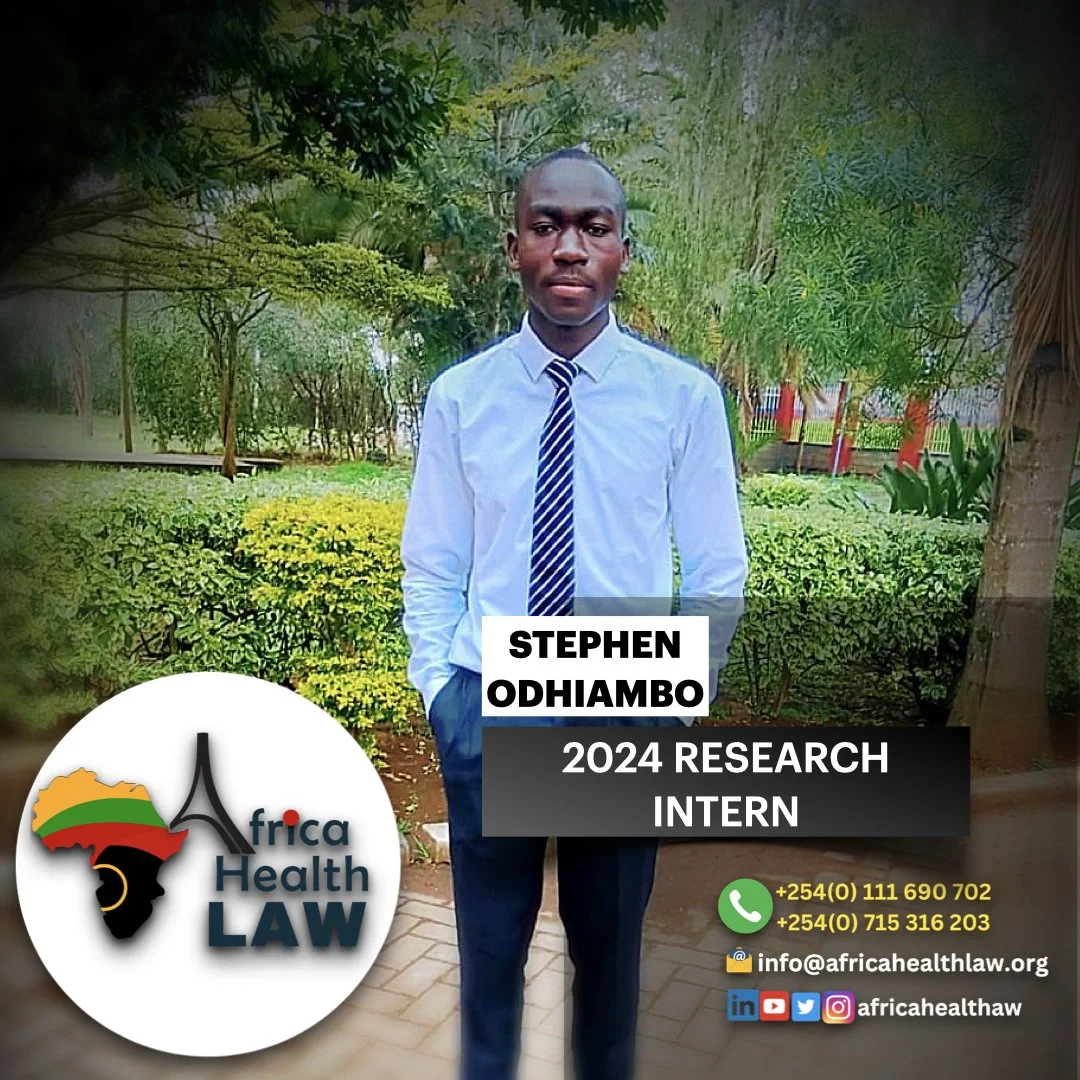
Author Profile
This legal commentary was solely authored by Stephen Odhiambo and reviewed by Dr. Faith Simiyu|Founder(Africa Health Law)